Coming home to a door that has been forced or a window that has been pried open is one of the worst feelings there is. Your sense of safety takes a hit, and it is hard to think clearly. The steps below are meant to give you a calm order to work in, so you protect yourself first, preserve what the police need, and then make your home secure again. A break-in is also one of the most common reasons people call us, and getting the locks sorted out quickly is a big part of feeling safe in your own home again.
Do not go inside alone
If you arrive to signs of a break-in, do not walk in to check whether the intruder is still there. Go to a safe spot, a neighbor's house or your car with the doors locked, and call the police. Let officers clear the home before you step inside. Your phone, your safety, and your patience are worth far more than anything inside the house.
Document everything before you clean up
Once the police say it is safe, resist the urge to tidy immediately. Take photos of the damaged door or window, the entry point, and anything that was moved or taken. This record helps both the police report and your insurance claim. Make a list of missing items with any serial numbers you have. The more detail you capture now, the smoother the claim goes later.
Assume your keys are no longer secure
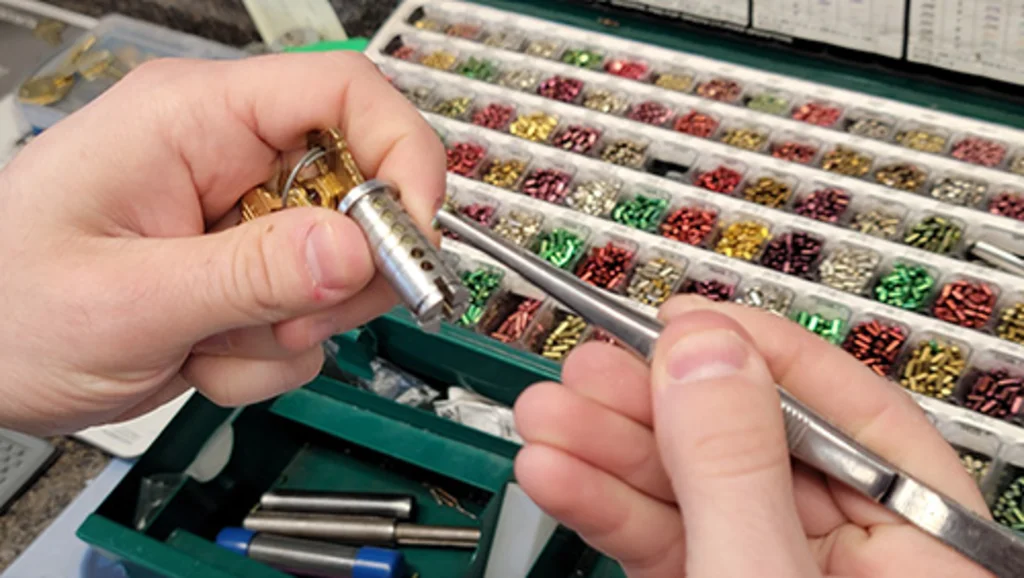
If a key was taken, or if you simply cannot account for every copy, treat every exterior lock as compromised. The same is true if you have ever handed keys to a contractor, a former tenant, or a house cleaner over the years. The fastest and most affordable way to lock out anyone with an old key is to rekey your existing hardware, which changes the internal pins so old keys stop working while you keep the locks you already own.
Rekey, repair, or replace
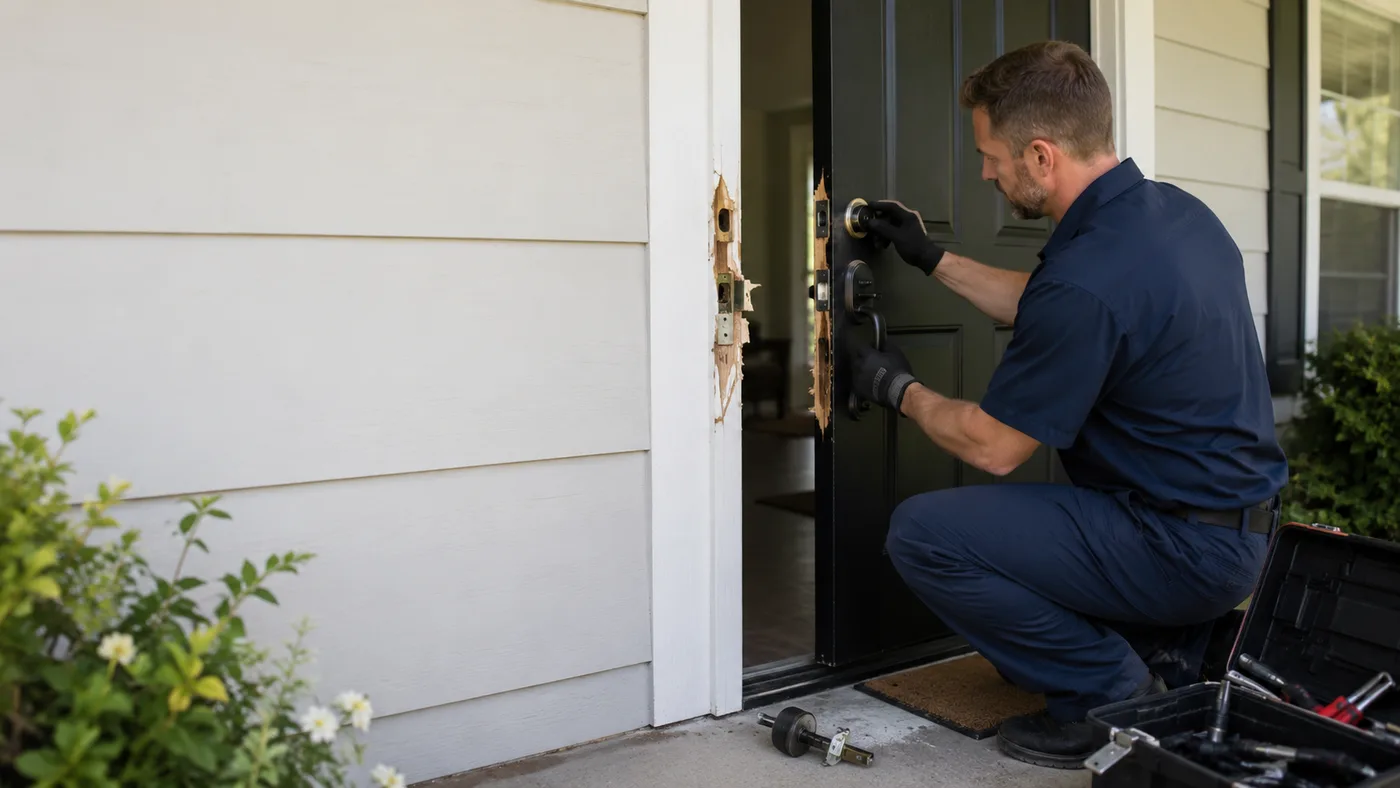
Whether you rekey or replace depends on the damage. If the lock still works but you are unsure who has a key, rekeying is usually enough and costs less. If the deadbolt or door frame was forced and the hardware is bent or weakened, replacement is the safer call, and it is a good moment to upgrade to a stronger deadbolt and a reinforced strike plate. We can look at what failed and tell you honestly which option protects you for the least money.
Strengthen the weak points
Most break-ins in Palm Beach County come through a kicked-in door or an unsecured sliding door rather than a picked lock. A longer strike-plate screw that reaches the framing, a proper grade deadbolt, a secondary lock or bar on sliding doors, and good lighting near entrances all make a real difference. We can handle the lock work in one visit and point out the simple upgrades that stop a repeat attempt.
We come to you, day or night
A break-in does not wait for business hours, and neither do we. As a 24/7 mobile locksmith covering West Palm Beach, Wellington, Boca Raton, and the rest of the county, we can secure your home the same day, often within about 20 minutes of your call. We rekey or replace what needs it, make sure every door locks the way it should, and leave you with keys only you control. Call (561) 839-9919 and we will help you feel safe at home again.
Frequently Asked Questions
Should I rekey or replace my locks after a break-in?
If the lock still works and you only need to retire old keys, rekeying is faster and cheaper. If the hardware or frame was damaged, replacing it and adding a reinforced strike plate is the safer choice.
How quickly can you secure my home?
We are available 24/7 and reach most of Palm Beach County in about 20 minutes, so we can usually rekey or replace your locks the same day you call.
Can you tell which entry point the intruder used?
We can inspect the doors, windows, and hardware and point out where the failure happened, then recommend the upgrades that stop a repeat attempt at that weak point.
Will rekeying stop everyone with an old key?
Yes. Rekeying changes the internal pins so every previous key stops working, which is the simplest way to lock out anyone who may still have a copy.
Do I need to file a police report first?
Always report a break-in to the police and let them clear the home before you enter. Documenting the scene also helps your insurance claim before any lock work begins.